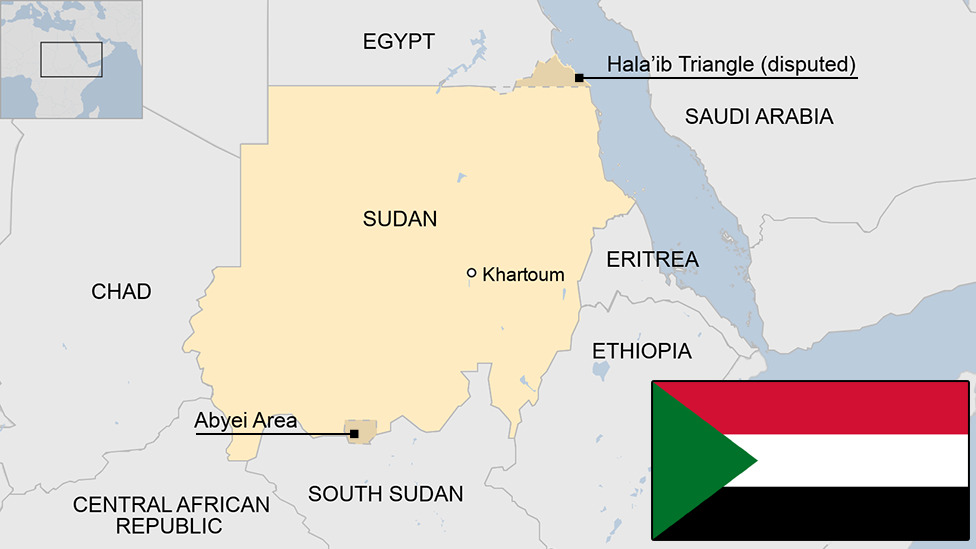
The case of a Christian relief worker detained in Sudan has become an urgent plea for help, as her family says she has now spent five months in captivity with no way to reach her. Najwa Musa Konda, an aid worker in the Nuba Mountains of South Kordofan state, was taken into custody on April 1, 2026, according to Morning Star News.
Her relatives are asking rebel commanders to account for her safety and are urging rights groups in the region to step in. She is being held by fighters linked to the Sudan People’s Liberation Army-North (SPLA-N), sources said.
Her detention comes during a broader crackdown on churches and aid organizations across South Kordofan, where pastors have been abducted and, in some cases, killed in recent weeks. The story has drawn attention to the vulnerability of Christian workers in one of the world’s most dangerous regions for the faith.
Christian Relief Worker Detained in Sudan: Key Takeaway
- A Christian aid worker held by SPLA-N fighters in Sudan’s Nuba Mountains for five months remains cut off from her family as attacks on churches in the region grow.
Your name is worth guarding, wherever you serve.
Najwa’s ordeal began when private notes were seized and turned against her. You can quietly reduce your own exposure with Optery’s personal data and identity removal service.
Who Is Najwa Musa Konda?
An Aid Worker in the Nuba Mountains
Najwa Musa Konda works for the Nuba Relief, Rehabilitation and Development Organization in Kauda and is a member of the Episcopal Church of Sudan, according to Morning Star News.
Her role placed her among the many Christian workers serving displaced and vulnerable families in a region battered by war.
She was detained on April 1 while traveling from the Nuba Mountains toward South Sudan. SPLA-N fighters intercepted her vehicle and searched her belongings, seizing a personal notebook that contained handwritten entries critical of regional military leadership, the report said.
Since her arrest, she has reportedly been moved between at least two separate detention facilities in the region. Her family says she has been cut off from all contact with relatives and legal representatives, leaving them without information about her condition.
A Family’s Urgent Appeal
Najwa’s relatives have made a public appeal for her release. One relative described the silence they have faced since the day she was taken.
“We have not heard from her since her arrest because we are strictly banned from visiting,” the relative told Morning Star News, speaking on condition of anonymity because of security fears.
The family is calling on SPLA-N leaders to account for her safety and is urging rights groups in the region to intervene.
Their appeal is sharpened by a painful family connection: Najwa’s sister, Zakia Musa Konda, was among four Samaritan’s Purse aid workers detained earlier this month by SPLA-N fighters. Those four were freed two days later, sources said, but Najwa remains in custody.
A Growing Crackdown in South Kordofan
Najwa’s detention is not an isolated event. It fits a pattern of pressure on Christian leaders and institutions across the area, part of what appears to be a rising wave of abductions and killings.
Church Leaders Abducted and Freed
Two church leaders were recently abducted and later released. The Rev. Yaqob Ibrahim Tia and Zakaria Suliman Jana, both prominent leaders of a Sudanese Church of Christ (SCOC) congregation in Heiban, South Kordofan, were freed on July 28 and Aug. 1 respectively, area Christians said. Members of a breakaway faction of the SPLA-N were reported to be responsible.
Pastor Yaqob Ibrahim Tia was abducted from his home on July 23 and was released along with several family members: two sons, ages 17 and 20, a nephew aged 15, and Daniel Ibrahim Tia. Daniel is a brother of Catholic priest Fadi Ibrahim Tia, who is also a brother of Pastor Yaqob Ibrahim Tia, according to Morning Star News.
Pastor Jana was abducted on the morning of July 31, following the earlier abduction of Pastor Yaqob Ibrahim Tia. Sources said the assailants made no ransom demands and appeared to want only to show their ability to destabilize the region.
Killings and Displacement
The abductions came alongside deadly violence. On July 24, breakaway SPLA-N militia shot and killed Episcopal Pastor Adel Idris Jongool in the Dabi administrative unit of Heiban District, the report said.
Those attacks followed the killing on June 19 of a Catholic priest and one of his guards at Holy Cross parish in Kauda, South Kordofan, carried out by the same breakaway fighters. Another guard was shot, survived, and received hospital treatment.
Because the area controlled by the SPLA-N is closed to media, full details are hard to confirm. Even so, word has leaked out that the conflict has already displaced hundreds of people, the majority of them women, children, and the elderly.
The Wider War in Sudan
To understand Najwa’s case, readers new to the story need the wider context of Sudan’s conflict, which has redrawn front lines and swept up civilians far beyond the Nuba Mountains.
A New Frontline in the Nuba Mountains
The Nuba Mountains have long been an SPLA-N stronghold in its struggle against Khartoum, and the area stayed largely outside the military conflict that broke out in Sudan in April 2023.
That changed when the SPLA-N joined forces with the paramilitary Rapid Support Forces (RSF) against the Sudanese Armed Forces (SAF), opening a new frontline.
New armed factions have since emerged in the Nuba Mountains and are fighting the SPLA-N, which has led to more killing and the displacement of civilians.
Both the RSF and the SAF are described by Morning Star News as Islamist forces, and both have attacked displaced Christians on accusations of supporting the other side’s combatants. You can read a related account of one such incident in this report on a church prayer service attacked in Sudan.
From Coup to Civil War
The conflict between the RSF and the SAF grew out of a shared military rule that followed an October 2021 coup. Since fighting erupted, it has terrorized civilians in Khartoum and elsewhere, killing tens of thousands and displacing more than 12 million people inside and outside Sudan’s borders, according to the U.N. Commissioner for Human Rights.
The SAF’s Gen. Abdelfattah al-Burhan and RSF leader Mohamed Hamdan Dagalo, who was then his vice president, were in power when civilian parties agreed in March 2023 on a framework to restore a democratic transition the following month. Disagreements over how to structure the military torpedoed final approval.
Burhan sought to place the RSF, a paramilitary outfit with roots in the Janjaweed militias that once helped former strongman Omar al-Bashir put down rebels, under the regular army’s control within two years.
Dagalo would accept integration only over a period of no fewer than 10 years. Both leaders have Islamist backgrounds while presenting themselves to the international community as advocates of democracy and religious freedom.
Religious Freedom in Sudan
Sudan is 93 percent Muslim, with adherents of ethnic traditional religion making up 4.3 percent of the population and Christians 2.3 percent, according to Joshua Project. The country’s small Christian minority has long borne the weight of political upheaval.
Sudan was ranked No. 4 among the 50 countries where it is most difficult to be a Christian in Open Doors’ 2026 World Watch List. The nation had dropped out of the list’s top 10 for the first time in six years when it ranked No. 13 in 2021, only to climb again.
After the fall of Bashir’s dictatorship in 2019, Sudan saw two years of gains in religious freedom. The transitional government of civilians and the military undid some provisions of sharia (Islamic law).
It outlawed labeling any religious group as “infidels” and effectively rescinded apostasy laws that had made leaving Islam punishable by death.
That progress was thrown into doubt by the coup of Oct. 25, 2021, after which many Christians feared the return of the harshest aspects of Islamic law.
The U.S. State Department had removed Sudan from its list of Countries of Particular Concern in 2019, upgrading it to a watch list after years of designation from 1999 to 2018, then removed it from the Special Watch List in December 2020.
Why It Matters for Believers
Behind the headlines is a woman whose family cannot reach her, and a church community under pressure. For Christians reading from a place of safety, the story raises questions of remembrance, intercession, and how to respond with truth rather than fear.
Remembering Those in Chains
Scripture calls believers to keep the imprisoned close in heart and prayer. “Remember the prisoners as if chained with them” (Hebrews 13:3) frames Najwa’s situation not as distant news but as a shared burden within the body of Christ.
Her family’s plea, that she has been silenced and unseen for five months, is exactly the kind of suffering the verse asks the wider church not to forget.
The Call to Stand in the Gap
The name of this ministry comes from Ezekiel 22:30, where God looked for someone to “stand in the gap before Me on behalf of the land” (NKJV). Cases like Najwa’s give that call a concrete shape.
Intercession is not passive; it can move alongside practical advocacy for the detained and the displaced. Readers who want to grow in this discipline may find encouragement in this reflection on the call to intercede.
Compassion Without Sensationalism
It is tempting to reduce persecution stories to outrage. A more faithful response holds together honesty about the facts and compassion for the people involved, including displaced Muslims and Christians alike who are caught in this war.
Believers can pray for Najwa’s release, for the safety of church leaders in Heiban and Kauda, and for justice to reach the vulnerable. The theme of God as a defender of the oppressed runs through the whole of Scripture, as explored in this devotional on the defender of the oppressed.
Steward what is entrusted to you with care.
Sensitive records deserve protection. Keep your important files private and recoverable with Tresorit’s encrypted cloud storage and dependable backup through IDrive cloud backup.
Looking Forward
Najwa Musa Konda’s family continues to wait, still barred from visiting and still without word of her condition after five months. Their appeal to SPLA-N leaders and to regional rights groups remains the clearest path toward her release, and it deserves attention from the wider church.
Her case sits within a troubling pattern in South Kordofan, where pastors have been abducted, one has been killed, and hundreds of civilians have been displaced. The wider war between the RSF and the SAF has only deepened the danger for Sudan’s small Christian minority.
For believers, the story is an invitation to remember the imprisoned, to intercede with persistence, and to support credible efforts on behalf of the persecuted. Najwa is not forgotten, and neither are the many families in the Nuba Mountains living under the shadow of this conflict.
Watchfulness protects the home and the household.
Guard your devices and accounts wisely with Bitdefender’s device protection, safeguard your credentials using the 1Password manager, and shield your inbox from deception with EasyDMARC email security.
Questions Worth Answering
Who is Najwa Musa Konda?
- She is a Christian relief worker for the Nuba Relief, Rehabilitation and Development Organization in Kauda and a member of the Episcopal Church of Sudan, held in custody since April 1.
When and how was she detained?
- She was taken on April 1 while traveling from the Nuba Mountains toward South Sudan, after SPLA-N fighters intercepted her vehicle and searched her belongings.
Why was she reportedly arrested?
- Fighters seized a personal notebook that contained handwritten entries critical of regional military leadership, according to Morning Star News.
Where is she being held?
- She has reportedly been moved between at least two separate detention facilities in the region and is cut off from her family and lawyers.
Who is holding her?
- She is being held by the Sudan People’s Liberation Army-North (SPLA-N), according to sources cited by Morning Star News.
Can her family contact her?
- No; a relative said the family is strictly banned from visiting and has not heard from her since her arrest.
What is her connection to Samaritan’s Purse?
- Her sister, Zakia Musa Konda, was among four Samaritan’s Purse aid workers detained earlier this month by SPLA-N fighters and freed two days later.
What other attacks have hit South Kordofan?
- Pastors Yaqob Ibrahim Tia and Zakaria Suliman Jana were abducted and later freed, Pastor Adel Idris Jongool was killed on July 24, and a Catholic priest and a guard were killed on June 19.
Where does Sudan rank for Christian persecution?
- Sudan was ranked No. 4 on Open Doors’ 2026 World Watch List of countries where it is most difficult to be a Christian.
How can believers respond?
- Through prayer for Najwa and the wider church in the region, informed advocacy, and support for credible rights groups seeking her release.
Reporting in this article is based on coverage by Christian Daily International and Morning Star News, with additional background on the June killing reported by Crux.