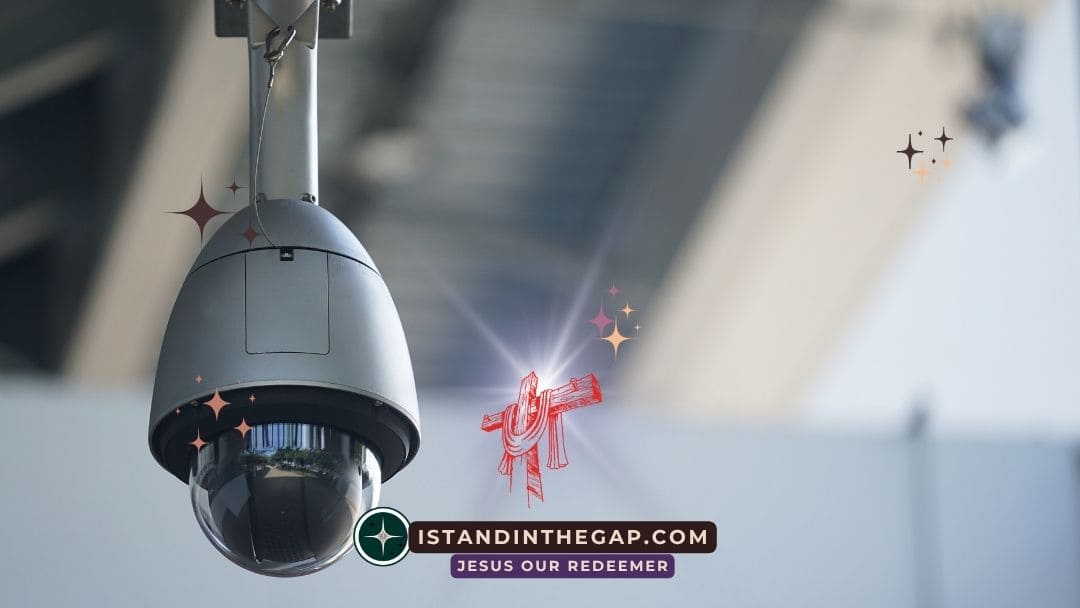
ICE church surveillance has placed the Trump administration under scrutiny from a federal judge, who has ordered officials to explain why they should not be held in contempt. The dispute centers on University Baptist Church in Minneapolis.
Judge F. Dennis Saylor IV had restricted immigration enforcement at places of worship in February. Court records later indicated that agents watched the congregation and even entered the building.
The government has been ordered to respond to the allegations by 28 August, with a hearing expected next month. Church leaders say a sacred space was breached.
ICE Church Surveillance: Key Takeaway
- A federal judge has ordered the Trump administration to explain why ICE church surveillance in Minneapolis should not be treated as contempt of his February order.
Scripture treats what is sacred and private as worth guarding, and that same care extends to the records and conversations entrusted to us.
For families and ministries that want to keep sensitive files away from watching eyes, encrypted cloud storage from Tresorit locks documents behind strong encryption, so only the people you choose can open them.
Background: An Order Meant to Protect Places of Worship
To understand the current clash, it helps to start with a policy change earlier in the year. The legal dispute follows the Trump administration’s decision to rescind previous restrictions on immigration enforcement in locations once treated as sensitive, including churches, schools, and hospitals.
Religious organizations representing thousands of worshippers responded by launching legal challenges, arguing that the change threatened religious freedom and their ability to minister to immigrant communities.
Those challenges are the reason a court order now stands between federal agents and the sanctuary door.
What the February Injunction Said
In February, Judge Saylor granted an injunction restricting immigration enforcement at places of worship, describing the prospect of raids during church services as profoundly troubling.
His written reasoning warned about the risks of giving agents wide discretion inside a church.
Saylor cautioned that, under the new policy, officers could carry out a raid with weapons drawn at almost any church proceeding, whether a regular Sunday service, a wedding, a baptism, a christening, or a funeral, limited only by their own discretion and common sense.
That warning is now central to whether the government crossed a line it was told not to cross. You can read more about the church and the ongoing case in reporting by the Minnesota Star Tribune and in the original account from Premier Christian News.
What Court Records Revealed
Surveillance on Two Sundays in April
Court documents later showed that federal agents monitored University Baptist Church on two Sundays in April, photographing people entering and leaving the building and checking vehicle registration details, according to The Independent.
For a congregation, that means ordinary worshippers arriving for a Sunday gathering were being recorded as they came and went.
An Undercover Agent Inside the Church
The activity did not stop at the parking lot. An undercover ICE agent entered the church gymnasium in May while attending a class that authorities said was linked to a group described as left leaning.
The agent reportedly used a concealed audio recorder while speaking with participants. That detail, an agent recording people inside the church building itself, is at the heart of the church’s complaint.
Operation Puppet Master
The surveillance did not stand alone. It formed part of a wider federal investigation known as Operation Puppet Master, which authorities said targeted people suspected of supporting efforts to obstruct federal law enforcement.
In other words, the government has framed its actions as part of a criminal inquiry rather than routine immigration enforcement, a distinction that now matters a great deal in court.
How the Church Responded
Church leaders say they learned the full scope of the monitoring only through the court process, and they describe the discovery as deeply distressing.
Former church president Jean E. Lubke said in a sworn statement that leaders were shocked and upset to learn the Department of Homeland Security had watched people coming and going on Sundays and had entered the building itself to record and surveil those inside.
Lubke called the activity a complete violation of the church’s sacred space. Lawyers representing the faith groups challenging the administration described the operation as clear and egregious violations of the injunction.
Their argument is straightforward: the order was meant to keep enforcement activity out of worship spaces, and agents were inside one.
The Government’s Position
The administration sees the matter differently. The Department of Homeland Security disputes that the operation breached the court order, arguing that the surveillance was not carried out for the purpose of enforcing immigration law and therefore did not fall within the restrictions imposed by the court.
Faith leaders reject that reading. They argue that authorities cannot decide for themselves when a location protected by the injunction should stop receiving that protection. The court will now weigh which interpretation holds.
What Happens Next
The government has been ordered to respond by 28 August, and a hearing is expected next month to consider whether the administration should face contempt for violating the preliminary injunction.
Until then, the question of whether a court order was broken inside a house of worship remains unresolved.
Why It Matters for Believers
This story reaches beyond one congregation. For Christians, it raises questions about the sanctity of worship, the freedom to gather, and how believers respond when trust is strained.
The Meaning of Sacred Space
For many believers, a sanctuary is not merely a building but a place set apart for prayer and fellowship. That is why Jean E. Lubke’s description of a violated sacred space resonated so widely.
Whatever the legal outcome, the account of an agent recording conversations inside a church touches a tender nerve for people who view gathering for worship as holy ground. The wider question of protecting the church as a place of refuge is worth prayerful reflection.
Religious Liberty and Ministry to Immigrants
The churches that brought the legal challenge argued that removing protections for worship spaces threatened both religious freedom and their calling to serve immigrant communities.
Believers across the political spectrum may weigh this differently, yet the concern raised by these congregations, that fear at the door could keep people from worship, speaks to the church’s mission to welcome the stranger.
Questions of conscience and the church’s public witness sit close to the surface here.
Watchfulness Without Fear
Scripture holds two truths together: believers are called to be alert, and they are also called to trust. As the psalmist writes in Psalm 27:1 (NKJV), “The Lord is my light and my salvation; Whom shall I fear?”
The account of hidden recorders and photographed license plates can unsettle a congregation, yet many Christians find steadiness in the conviction that God already sees what is done in secret. Watchfulness need not curdle into fear.
Praying for Those in Authority
Believers are also encouraged to pray for leaders and for justice to be done rightly. That includes praying for the judge, for government officials, and for the church members affected, that truth would come to light and that the outcome would honor both law and conscience.
Holding leaders up in prayer, even amid disagreement, remains a Christian habit worth keeping.
Watchfulness is a quiet Christian discipline, and part of loving your household is protecting the devices that now hold so much of daily life.
A dependable guard such as Bitdefender device protection keeps watch for threats on your computers and phones, giving your family one less thing to worry about at home.
Looking Forward
The coming weeks will test how the courts treat a case that mixes constitutional questions with the deeply personal matter of worship. The government must file its response by 28 August, and a hearing is expected soon after.
For University Baptist Church, the immediate hope is simple: an account of what happened and an assurance that a sacred space will be respected. The broader faith coalition wants clarity on whether the February order still means what it appears to say.
Whatever the ruling, the story invites believers to hold together vigilance and peace. Christians can care about the rule of law, defend the freedom to gather, and still refuse to let anxiety govern their worship.
The final word belongs to the court, but the church’s posture, prayerful and steady, can remain the same.
Questions Worth Answering
What is the ICE church surveillance case about?
- A federal judge has ordered the Trump administration to explain why agents’ monitoring of a Minneapolis church should not be treated as contempt of a court order restricting enforcement at places of worship.
Which church was involved?
- University Baptist Church in Minneapolis, whose leaders say their sacred space was breached.
What did the February court order do?
- Judge F. Dennis Saylor IV granted an injunction restricting immigration enforcement at places of worship, calling the prospect of raids during services profoundly troubling.
What did agents allegedly do?
- Court records say agents watched the church on two Sundays in April, photographed people, and checked vehicle registrations, and that an undercover agent entered the gymnasium in May using a concealed audio recorder.
What is Operation Puppet Master?
- It is the wider federal investigation the surveillance was part of, which authorities said targeted people suspected of supporting efforts to obstruct federal law enforcement.
How did the church respond?
- Former church president Jean E. Lubke described the activity in a sworn statement as a complete violation of the church’s sacred space.
What does the government say?
- The Department of Homeland Security disputes that it broke the order, arguing the surveillance was not carried out to enforce immigration law.
Could officials be held in contempt?
- The judge has ordered the administration to explain why it should not be, and a hearing is expected to weigh the question.
When must the government respond?
- By 28 August, with a hearing expected the following month.
Why does this matter for Christians?
- It touches religious liberty, the sanctity of worship, and the church’s calling to serve immigrant communities, questions that reach well beyond a single congregation.